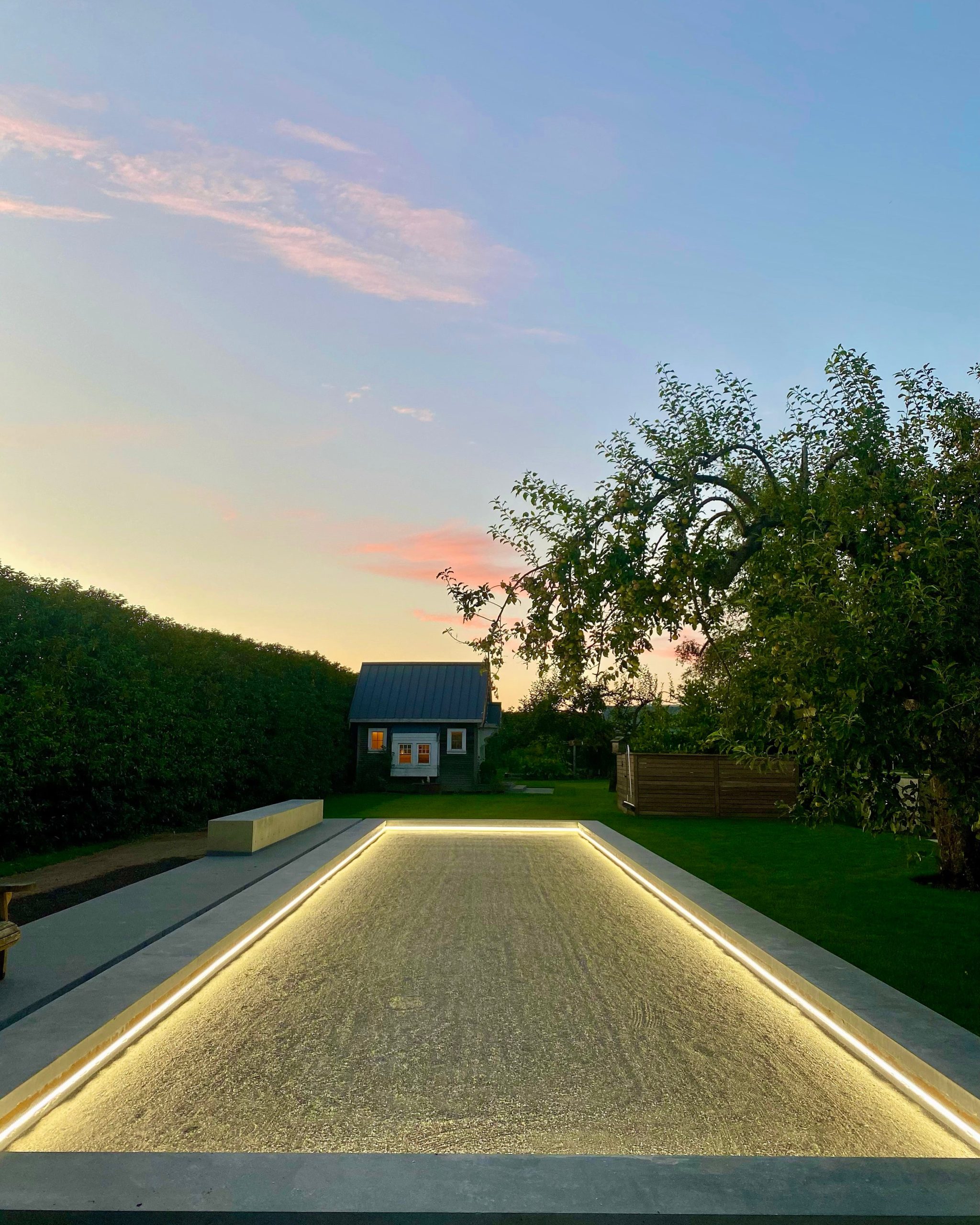
A good backyard game area does something a patio alone cannot do: it gives people a reason to stay outside after the food is gone. A bocce court can turn an ordinary American backyard into the kind of place where neighbors drift over, kids learn patience, and adults compete harder than they planned. The beauty is that you do not need a country-club lawn or a contractor’s budget to make it work. You need a level rectangle, smart material choices, and the discipline to handle drainage before the first ball rolls. For homeowners comparing outdoor living ideas, this project sits in a sweet spot because it feels custom without demanding a full yard renovation. A polished version can look sharp beside a pool house in Arizona, while a thriftier build can fit behind a ranch home in Ohio. The mistake is treating the court like decoration. It is not. It is a playing surface, and playing surfaces punish shortcuts every time rain, roots, or uneven fill show up.
Planning the Space Before Money Starts Moving
The best builds start with restraint, not spending. Many homeowners get excited by photos of long, elegant courts framed by stone walls and string lights, then realize their yard cannot support that scale without swallowing the lawn. A court should feel like it belongs in the yard, not like it landed there from another house.
What Size Should a Backyard Bocce Ball Court Be?
A backyard bocce ball court does not have to match tournament dimensions to play well. A full-size court can run much longer than most American backyards can comfortably handle, so home builds often shrink the length while keeping the same basic rectangle and flat playing character. A common backyard layout may be around 10 to 12 feet wide and 50 to 60 feet long, though smaller yards can still work with careful proportions.
The smarter question is not, “What is the official size?” It is, “Can people stand, throw, walk around, and still enjoy the rest of the yard?” A narrow side yard in California may handle a lean court beside a fence, while a deeper suburban yard in Pennsylvania might support a longer lane with seating at one end. The court should serve the house, not bully it.
A smaller playing area changes the style of the game. Long power throws matter less, and softer placement becomes the fun part. That is not a flaw. For casual family play, a slightly compact surface can be better because new players feel involved sooner and do not spend half the evening chasing wild throws into the mulch.
How Do Setbacks, Shade, and Yard Shape Change the Layout?
Setbacks matter before materials matter. You need room around the edges for walking, raking, trimming, and the occasional missed throw. Placing the frame tight against a fence may look tidy on paper, but it becomes annoying when weeds creep in or a ball kisses the rail and dies in a damp corner.
Shade also changes the court more than people expect. A tree that feels pleasant over a seating area can become a maintenance headache over the playing surface. Leaves, sap, seed pods, and roots all have opinions, and none of them care about your weekend plans. A court near mature trees needs stronger edging, more frequent cleaning, and a base that resists root movement.
Yard shape can push you toward smarter choices. A long side yard beside a garage may be perfect because it uses dead space that nobody enjoyed anyway. A wide open backyard may need the court angled slightly toward a patio so players stay connected to the grill, seating, and house. The best layout feels social before the first ball is thrown.
Budgeting and Building a Bocce Court That Fits the Yard
Cost control begins with deciding what the court must do every week, not what it should look like on the day it is finished. A bocce court built for occasional family play has different demands than one built beside a pool, guest house, or short-term rental. Spend where performance lives, then dress up the edges only after the base is honest.
Where Should a Low-Budget Build Spend First?
A low-budget court should spend first on excavation, leveling, drainage, and compaction. Those parts are boring, which is exactly why they matter. Pretty gravel over soft soil is still soft soil. After one wet spring in the Midwest or one heavy storm in Georgia, the surface will tell the truth.
The lower-cost path usually means using pressure-treated lumber or simple landscape timbers for the frame, compacted gravel below, and a clean playing layer that can be refreshed later. This approach gives you a playable court without pretending it is a resort feature. It also lets you upgrade in stages, which is often the sanest way to build.
One practical example: a homeowner in Kansas with a flat side yard may skip masonry walls, use basic framed edges, rent a plate compactor, and choose a surface that can be topped off each season. The result will not look like a magazine spread on day one, but it can play well for years if the base drains and the frame stays square.
When Does a Premium Backyard Game Space Make Sense?
A premium build makes sense when the court is part of a larger outdoor living plan. If you already have a patio, fire pit, outdoor kitchen, or pool area, the court can become a visual anchor instead of a loose yard project. That is where better edging, lighting, seating, and landscape integration earn their keep.
The upgrade should still start below the surface. Better finishes cannot rescue poor grading. A high-end court may use masonry borders, a deeper gravel layer, cleaner transitions, and a more refined top surface. Lighting can also shift the value because summer games often happen after dinner, not at noon.
The counterintuitive part is that premium does not always mean larger. A smaller court with excellent drainage, tight edges, low-glare lighting, and a comfortable viewing bench can feel richer than a long court squeezed into the wrong place. Good design respects how people move, talk, pause, and play.
Materials That Decide How the Ball Feels
The surface is where the court gains its personality. Some materials roll fast and clean. Others slow the ball and make every throw feel softer. The right choice depends on climate, maintenance habits, and how polished you want the yard to look when nobody is playing.
Is a Crushed Oyster Shell Surface Worth the Extra Care?
A crushed oyster shell surface gives the ball a classic, controlled roll that many players love. It has a soft, coastal look and packs into a firm layer when installed over the right base. In warm regions or homes with a beach-inspired landscape, it can look natural instead of staged.
The tradeoff is care. A crushed oyster shell surface needs periodic leveling, light watering in dry spells, and occasional top-ups as material settles or scatters. It can also track onto nearby patios if transitions are sloppy. That does not make it a bad choice. It means the homeowner must be honest about upkeep.
For a New England yard near a cedar fence and hydrangeas, the material may fit beautifully. For a rental property where guests may drag chairs across the surface and never rake it, a tougher, simpler top layer may be wiser. Good material choices match real behavior, not fantasy behavior.
How Does a Decomposed Granite Base Hold Up Through Weather?
A decomposed granite base can create a firm, natural-looking layer that handles casual play well when installed and compacted with care. It works especially well in dry or moderate climates where drainage is planned from the start. The texture feels less formal than synthetic turf and more finished than loose dirt.
Water management decides the outcome. A decomposed granite base that sits in a low spot will rut, crust, or soften after storms. Under the same material, a graded gravel foundation and slight crown can keep play more consistent. The eye may not notice that slope, but the ball will.
Western states use this material often because it fits the landscape language of patios, desert gardens, and drought-aware yards. In wetter areas, it can still work, but the base depth and drainage path deserve more respect. Materials do not fail alone. They fail when the site asks them to do the wrong job.
Drainage, Edges, and Maintenance That Keep It Playable
A court can look finished on the first weekend and still become a headache by the second season. The difference usually comes down to water, borders, and small habits. Long-term playability is rarely dramatic. It is a quiet reward for doing unglamorous things right.
Why Do Court Edging Boards Matter More Than They Look?
Court edging boards do more than frame the rectangle. They hold the surface in place, guide play, resist spreading, and protect the court from lawn creep. Weak edges turn a clean build into a messy strip of gravel and weeds faster than most homeowners expect.
The boards need to sit straight, stay anchored, and rise enough to contain the playing layer without becoming a trip hazard. Pressure-treated lumber is common for budget builds, while composite, stone, or concrete can serve more polished designs. The best choice depends on weather exposure and the look of the surrounding yard.
Court edging boards also affect how the game feels. A firm side rail gives players a predictable rebound and creates that satisfying sense of enclosure. Loose or wavy borders make every near-edge throw feel random. People may not know why the court feels cheap, but they will feel it.
What Weekly Care Keeps the Court Ready for Guests?
Weekly care should be simple enough that you will actually do it. Rake the surface lightly, remove leaves, pull weeds before they root, and check low spots after rain. A few minutes each week beats a full Saturday of repair after the court has been ignored for a month.
Seasonal care matters too. Spring is the time to inspect drainage, tighten border areas, add surface material where needed, and compact soft patches. In hot, dry regions, occasional moisture may help certain natural surfaces hold shape. In wet regions, clearing debris from the edges may matter more than adding water.
The smartest owners keep a small maintenance kit nearby: rake, broom, tamper, weed tool, and extra top material stored in a dry spot. That sounds ordinary because it is. Most outdoor projects fail from neglect, not disaster, and a bocce ball court is no exception.
Conclusion
The best backyard projects do not shout for attention every time you step outside. They quietly change how the space gets used. A well-built playing lane turns spare yard space into a habit, and habits are what make outdoor upgrades worth the money. You do not need the longest layout, the rarest surface, or the most expensive border to get there. You need a square frame, a stable base, a surface that fits your climate, and enough care to keep the roll honest. A bocce court rewards homeowners who think like builders before they think like decorators. Start with the yard you actually have, not the one from a resort photo. Measure the space, choose the budget lane that fits your life, and build the foundation with patience. The next step is simple: mark the rectangle this week and see what your backyard has been waiting to become.
Frequently Asked Questions
How much space do you need for a backyard bocce ball court?
Most homes can work with a court around 10 to 12 feet wide and 50 to 60 feet long. Smaller spaces can still play well if the surface is level, the frame is straight, and players have room to stand and move safely.
What is the cheapest way to build a bocce ball court at home?
The cheapest reliable method is a framed rectangle with compacted gravel below and a simple playing layer above. Save money on fancy borders, not drainage or leveling. A low-cost court can still play well when the base is stable.
Can you build a bocce ball court on grass?
Grass is not a good final playing surface because it slows the ball unevenly and changes after rain, mowing, and foot traffic. You can place a court where grass exists now, but the area should be excavated, leveled, and rebuilt with proper layers.
What surface is best for casual backyard bocce games?
Decomposed granite, oyster shell, stone dust, and some compacted blends can all work for casual play. The best choice depends on local weather and upkeep. A surface that drains well and stays smooth will beat a prettier material that needs constant repair.
Does a bocce ball court need drainage?
Drainage is one of the main reasons a court stays playable after storms. Without it, water can create soft spots, ruts, weeds, and uneven ball movement. Even a slight grade and compacted gravel layer can make a major difference.
How deep should the base be for a home bocce ball court?
Many home builds use several inches of compacted gravel under the playing layer, with depth adjusted for soil and climate. Wet or clay-heavy yards need more attention below the surface because poor soil movement can damage the court over time.
Can I install a backyard bocce ball court myself?
A careful homeowner can build one with basic tools, rented compaction equipment, and patience. The hardest parts are excavation, leveling, and keeping the frame square. Hiring help may be worth it if the yard slopes or drainage is difficult.
How do you maintain a bocce ball court after installation?
Light raking, debris removal, weed control, and low-spot repair keep the surface playable. After heavy rain, check for pooling or washout. Natural surfaces may need occasional top-ups, while framed edges should be inspected for movement each season.