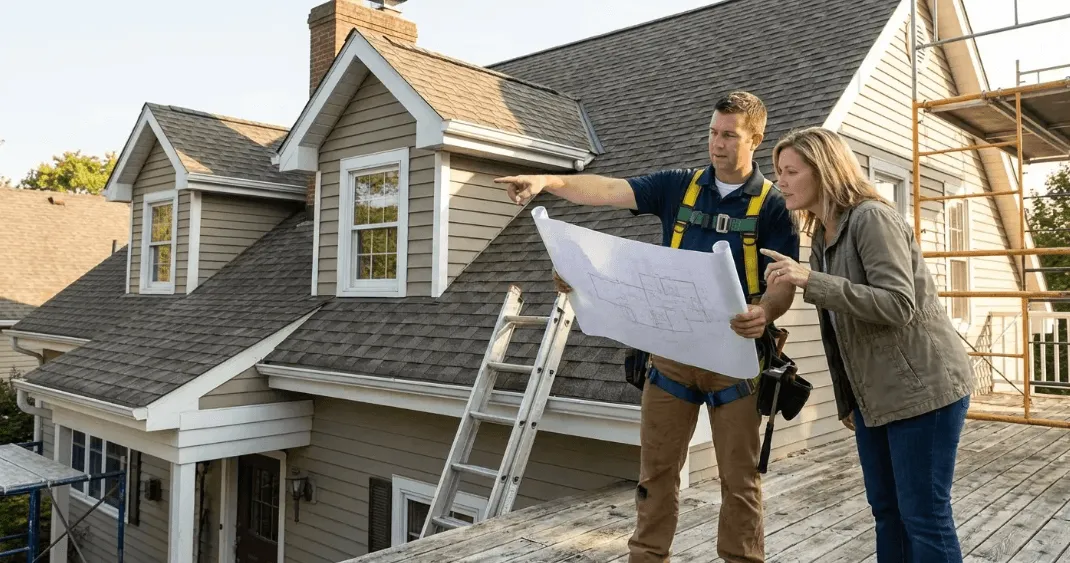
A short roof edge can make a solid house act strangely exposed. Rain runs too close to the siding, afternoon sun beats through windows, and the entry door feels like it was designed with no weather in mind. A roof eave extension can change that without turning the whole home into a major remodel. For many American homes, especially ranch houses, Cape Cods, farmhouses, and older suburban builds, the right overhang adds comfort while helping water land where it belongs.
The best projects start with restraint. You are not trying to bolt a giant visor onto the house. You are shaping shade, drip lines, and roof edges so they work with the home’s structure. Good exterior planning also fits into a broader maintenance mindset, the same kind of practical thinking shared through home improvement publishing resources for owners who want upgrades that hold up over time.
Eaves look simple from the driveway. They are not. A few extra inches can change how rain, sun, wind, gutters, fascia, and wall materials behave.
Roof Eave Extension Details That Move Water Away From Walls
Water damage rarely starts as a dramatic event. It begins with small habits: rain splashing against lower siding, gutters spilling at corners, or runoff dropping too close to the foundation after every storm. Building Science Corporation explains that peaked roofs and overhangs help protect walls from rain by shadowing and redirecting airflow, which is why eaves are more than decoration.
Water Runoff Solutions for Short Roof Edges
Short eaves often punish the lower half of a house. Water falls straight down, hits mulch or concrete, then bounces back onto painted siding, brick ledges, trim boards, and basement window wells. That splashback may look harmless in April, but by October it can leave stains, peeling paint, swollen trim, and damp soil near the foundation.
The smarter move is to treat the eave as the first part of the drainage system, not the last part of the roof. Water runoff solutions work best when the new edge sends rain cleanly into a gutter, past the wall plane, and away from vulnerable joints. On a vinyl-sided Ohio ranch, even a modest overhang can reduce the dark splash line that forms near the bottom courses after heavy spring storms.
Bigger is not always better, though. A deep projection without proper gutter sizing can dump more water into a system that already fails during heavy rain. The eave, gutter, downspout, and discharge path must act like one team, or the upgrade simply moves the problem from the wall to the corner of the house.
How Drip Edges and Fascia Shape Runoff
The last inch of the roof often decides whether the rest of the work succeeds. A clean drip edge helps water break away from the roof instead of curling back under the shingles and wetting the fascia. That small metal detail does not get much attention, but it earns its keep every time wind pushes rain sideways.
Fascia depth matters too. A shallow fascia can make an added overhang look thin and weak, especially on a house with broad walls and tall windows. A deeper fascia gives the new edge visual weight and creates enough room for properly hung gutters. On many American homes, that detail makes the difference between an upgrade that looks original and one that looks tacked on.
There is a quiet trap here. Homeowners often focus on how far the eave extends, then ignore where the water releases. The most useful overhang is not the longest one. It is the one that drops water into a controlled path every time the sky opens.
Shade That Works With Windows, Seasons, and Daily Comfort
Water control solves one side of the problem. Shade solves another. A well-planned eave can soften harsh light, reduce glare, and make rooms feel calmer during the hottest part of the day. The U.S. Department of Energy notes that properly sized roof overhangs can shade south-facing windows during summer months, which matters in many parts of the country where cooling bills climb fast.
Roof Overhang Ideas for Hot Afternoon Rooms
South and west exposures behave differently. South-facing windows often benefit from horizontal shade because the summer sun rides high overhead. West-facing windows are harder because the sun drops low in the afternoon and cuts under many roof edges. That is why roof overhang ideas should begin with the room that bothers you most, not with a random measurement from a photo.
A living room in Phoenix needs a different answer than a kitchen in Vermont. In hotter regions, deeper shade may protect furniture, reduce glare on screens, and make the room less punishing after lunch. In colder northern states, too much shade can block welcome winter sun, especially in homes that depend on passive warmth during bright cold days.
The counterintuitive truth is that shade can be too successful. A heavy overhang over a north-facing room may make that space feel dim and flat all year. Good design leaves some light alive. Comfort comes from control, not from turning the house into a cave.
Shade for Windows Without Making the House Look Heavy
A roof edge changes the face of a home. Add too much depth to a small cottage, and the windows can look squeezed. Add too little to a wide ranch, and the upgrade may disappear from the curb. Proportion carries more weight than homeowners expect.
Shade for windows can come from several forms: extended rafters, boxed eaves, small shed roofs, eyebrow details, or a coordinated porch roof over an entry. A narrow craftsman-style overhang with exposed rafter tails may suit a bungalow in Portland, while a cleaner boxed edge may fit a newer suburban home in Dallas. The house usually tells you which direction to take if you stop trying to force a trend onto it.
Small changes can feel generous when they line up with the architecture. Extending the eave over a kitchen window by 12 to 18 inches may soften the light without making the elevation feel top-heavy. That sort of restraint often looks more expensive than a huge projection because it feels intentional.
Structure, Wind, and Code Limits You Should Respect
Looks matter, but structure decides whether the project lasts. An eave catches wind, carries roof loads, holds gutters, and connects to framing that may be decades old. The 2024 International Residential Code includes limits for roof eave projections near lot lines, including a rule allowing only limited projections for certain detached garages close to a lot line. Local rules can also be stricter, so the permit office deserves a call before work begins.
Eave Extension Design for Framed Roofs
A framed extension needs a load path. That phrase sounds technical, but the idea is plain: the new roof edge must transfer weight and wind force back into solid structure. Sistered rafters, outlookers, lookouts, subfascia, and blocking all have roles depending on the roof style.
Eave extension design becomes more sensitive on older homes because framing may not match modern assumptions. A 1950s ranch may have undersized rafters by current standards, or previous owners may have cut corners during earlier repairs. You do not want to discover weak framing after the new soffit is closed and the gutters are installed.
Wind changes the math. The Building America Solution Center reports FEMA guidance for high-wind regions that recommends keeping gable roof overhangs limited and fastening ladder framing tightly in those conditions. A coastal home in Florida or the Carolinas should not copy the same overhang detail used on a calm inland lot. The weather gets a vote.
When a Small Canopy Beats a Full Extension
A full roof edge extension is not always the cleanest answer. Sometimes the smarter fix is a separate canopy over a door, a small shed roof over a patio slider, or a narrow metal awning over a window that takes brutal west sun. These smaller moves can solve the pain point without disturbing the main roof.
This matters on homes with complex rooflines. Adding eave depth across every edge can create awkward valleys, strange gutter turns, and heavy-looking corners. A targeted canopy may protect the back door from rain while leaving the main roof untouched. Less work. Less risk.
A local contractor may still need to flash that canopy into the wall with care. Bad flashing can turn a shade project into a leak project fast. The prettiest little roof in the world is a failure if water sneaks behind it and rots the sheathing.
Materials, Style, and Finishing Choices That Make It Look Original
The final look depends on details most people notice only when they go wrong. Soffits, fascia, brackets, trim depth, gutter profile, and paint color all decide whether the extension feels original to the house. Building Science Corporation’s water management guidance says overhangs, canopies, and porch roofs should drain water away from walls, and that larger overhangs can improve that protection when designed well.
Roof Overhang Ideas That Match Common American Homes
A brick ranch often looks best with a simple boxed eave and clean fascia. A farmhouse can handle a deeper projection with brackets or exposed tails. A mid-century home may want a thin horizontal line that stretches the profile without adding decorative fuss. The wrong style can make the house feel confused.
Roof overhang ideas should also respect the existing roof material. Asphalt shingles need proper edge details, starter strips, and ventilation paths. Metal roofing needs careful closure pieces and fastening at the edge. Tile or slate adds weight and may demand engineering before anyone extends framing.
Color can save or sink the job. Matching fascia to trim makes the extension feel built-in, while a sharp contrast can highlight every uneven line. On a white-sided New England home, a dark fascia may look crisp. On a small beige ranch, that same move can make the roof edge feel too loud.
Shade for Windows With Soffit and Ventilation Planning
Soffits do more than cover framing. Vented soffits help feed attic ventilation when paired with proper exhaust near the ridge. Block that path during an eave project, and the attic may trap heat and moisture. That mistake hides for a while, then shows up as curled shingles, musty smells, or winter roof problems.
Shade for windows should never come at the cost of attic health. A contractor may need to extend baffles, maintain intake airflow, and keep insulation from choking the eave. This is where a simple-looking project becomes building science in work boots.
The finish should also handle maintenance. Smooth PVC trim may suit wet climates because it resists rot. Wood can look beautiful, but it needs paint discipline. Aluminum soffit handles weather well, though it can feel thin on historic homes. Pick the material you are willing to maintain, not the one that looks best on installation day.
Conclusion
A good eave does not call attention to itself. It makes the house feel calmer, drier, cooler, and more finished without shouting for credit. That is the mark of a smart exterior upgrade. The roof edge should look like it always belonged there, even if it solved problems the original builder ignored.
The best roof eave extension is planned around the whole house, not one isolated measurement. Sun angle, gutter capacity, wind exposure, local code, framing strength, siding material, and curb appeal all matter. Skip one of those pieces and the project can turn into an expensive correction.
Start by watching your house during a real storm and during the hottest part of the afternoon. Notice where water lands, where glare hits, and where the wall takes abuse. Then talk with a qualified local contractor or designer before choosing the depth, style, and framing method. Measure twice, respect the weather, and build the edge your house should have had from the start.
Frequently Asked Questions
How far can roof eaves extend on a typical house?
Many homes use eaves in the 12- to 24-inch range, but the right depth depends on roof framing, wind exposure, window placement, and local code. Longer projections may need added structural support, especially on gable ends or homes in storm-prone regions.
Do extended eaves help keep rain away from siding?
Yes, extended eaves can reduce how much rain hits siding by moving the drip line farther from the wall. They work best when paired with proper gutters, downspouts, splash blocks, grading, and flashing. Poor drainage below the eave can still cause trouble.
Can deeper eaves reduce cooling costs in summer?
They can help by shading windows and reducing direct solar heat gain, especially on south-facing glass. Results vary by climate, window direction, roof height, and insulation. In hot states, exterior shade often works better than interior blinds because heat is blocked before entering.
Are roof eave extensions allowed near property lines?
Rules vary by city and state, and property-line limits can be strict. Fire separation distance, garage placement, and wall rating may affect what is allowed. Always check local building codes before extending an eave close to a neighbor’s lot.
What is the best material for soffits under extended eaves?
Aluminum, vinyl, fiber cement, PVC, and painted wood are common choices. Aluminum and vinyl need less maintenance, while wood gives older homes a more traditional look. The best choice depends on climate, budget, house style, and attic ventilation needs.
Do eave extensions need gutters?
Not always, but gutters usually make the upgrade work better. An eave moves water away from the wall, while a gutter controls where that water goes next. Without gutters, runoff can still damage landscaping, patios, walkways, or soil near the foundation.
Can I add eaves to a house that has almost no overhang?
Yes, but it is often more involved than adding trim. A contractor may need to extend rafters, add lookouts, rework fascia, adjust roofing, install soffits, and update gutters. Homes with tight lot lines or weak framing need extra review before work begins.
What is the difference between an eave extension and an awning?
An eave extension changes the roof edge itself, while an awning is usually a separate shade or rain cover attached over a door, window, or patio. Awnings can be simpler for targeted problems, but eave extensions often look more permanent and built-in.