A chimney can look solid from the yard and still be failing where it matters most. Once brick faces crumble, mortar turns sandy, or the stack starts pulling away from the roofline, chimney rebuild costs become more than a future repair bill. They become a safety decision. American homeowners often try to stretch one more winter out of a damaged chimney because the visible cracks seem small. That choice can get expensive fast, especially in freeze-thaw states where trapped water breaks masonry apart from the inside. A good contractor will not push a rebuild for every chipped brick, but they also will not pretend surface patching can save a stack that has lost its structure. If you are comparing bids, planning exterior updates, or building a stronger home maintenance budget, resources like property improvement planning can help you think beyond the first number on the estimate. The real question is not whether repair sounds cheaper. It is whether the repair will hold long enough to deserve your money.
When a Chimney Crosses the Line From Repair to Rebuild
The hard part is not spotting damage. The hard part is knowing when that damage has already moved past the point where patching makes sense. A chimney lives in rough weather, and the top few feet take the worst of it. Sun, rain, wind, snow, and heat from use all meet in one exposed structure. That is why a small crack on Monday can become loose brick by the end of a harsh Midwest winter.
Why Small Cracks Can Hide Bigger Masonry Trouble
Hairline cracks do not always mean disaster, but they deserve attention. Water enters those openings, sits behind the brick, and expands when temperatures drop. In places like Ohio, Pennsylvania, Michigan, and upstate New York, that cycle can punish a chimney faster than many homeowners expect.
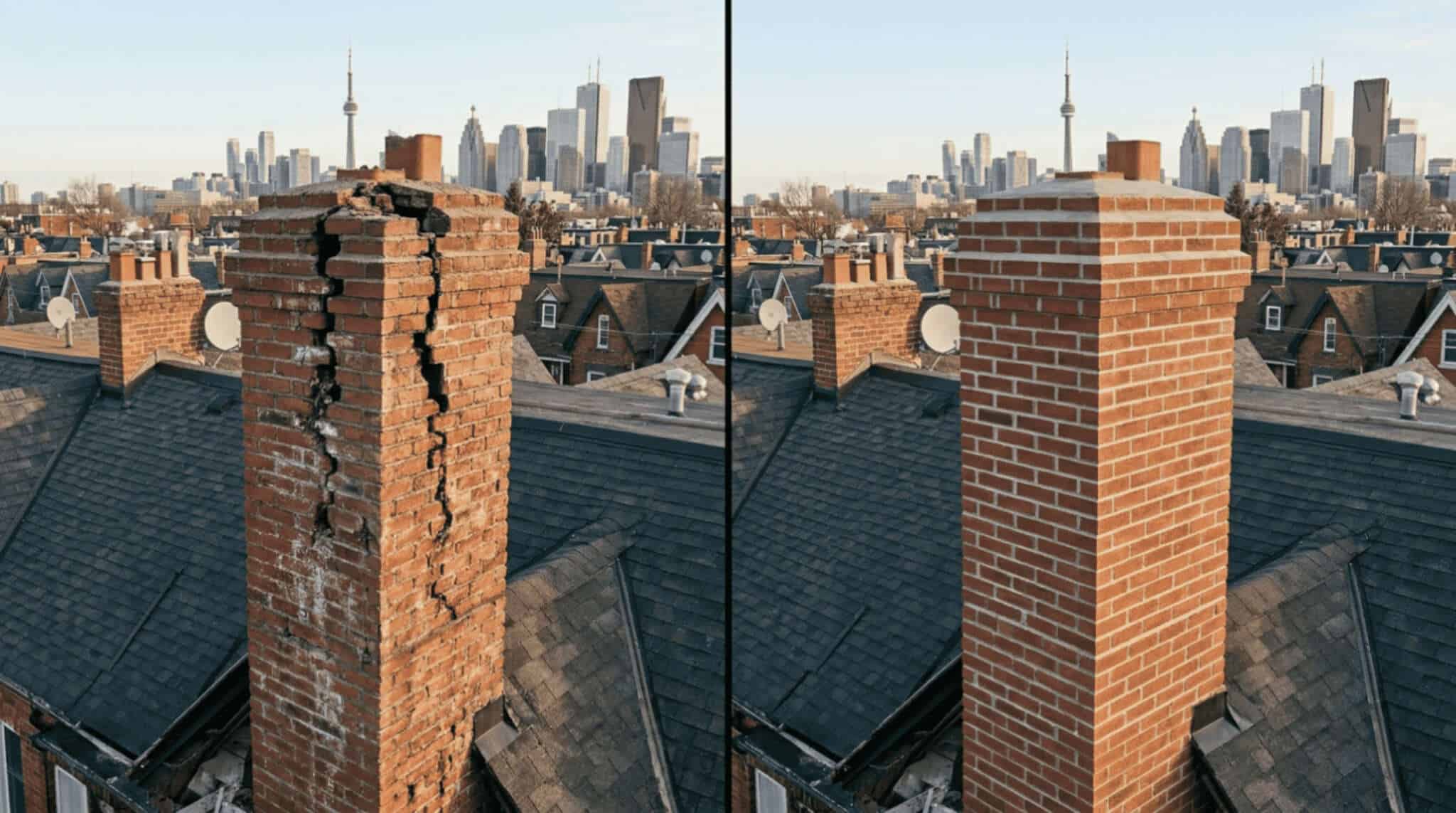
The first warning often looks boring. A few white mineral stains appear. A little mortar falls onto the roof. One brick face flakes off near the crown. None of that feels urgent until the chimney starts leaning or the flue area shifts. By then, chimney masonry repair may no longer be the smart choice.
A proper inspection looks below the surface. The mason checks the crown, flashing, mortar joints, brick condition, flue liner, and how the stack meets the roof. One loose brick is a repair. A pattern of looseness across several courses is a message. The chimney is telling you the system is losing its grip.
When Chimney Inspection Changes the Budget Conversation
A chimney inspection can feel like an extra cost when you already know something is wrong. That thinking is backward. The inspection is what keeps you from paying for the wrong fix. A $700 patch on a chimney that needs rebuilding is not savings. It is a deposit on a second bill.
For example, a homeowner in New Jersey may call about a leaking chimney after seeing water stains near a fireplace wall. The leak might come from bad flashing, but it may also come from a cracked crown and saturated brickwork above the roof. Those two problems carry different prices and different risks.
Good inspectors also separate cosmetic damage from structural damage. That matters because not every ugly chimney needs full removal. Sometimes tuckpointing, a new crown, and proper waterproofing solve the issue. Other times, the brick has softened so much that repairs have nothing strong left to bond to.
What Actually Drives the Price of a Chimney Rebuild
A rebuild estimate is not one number pulled from the air. It reflects height, access, brick type, roof pitch, labor market, demolition, cleanup, permits, and how much of the chimney must come down. Two houses on the same street can receive different bids because the work conditions are not the same.
Height, Roof Access, and Labor Risk Shape the Estimate
The taller the chimney, the more labor and staging the job needs. A short exterior stack on a single-story ranch in Texas is a different project from a chimney rising above a steep three-story home in Massachusetts. Roof pitch matters too. A steep slate roof slows work and raises risk.
Access can change the estimate before a brick is touched. If a mason can set ladders safely and place materials near the work area, the job moves faster. If the crew needs scaffolding, roof protection, or careful staging around landscaping, the labor hours climb.
That is why chimney repair cost comparisons online can mislead homeowners. A low national average does not account for your roof, your city, your brick, or your weather exposure. Local conditions decide the final bill far more than a generic price range.
Material Matching Can Add More Than Homeowners Expect
Brick is not all the same. Older homes often have masonry that is softer, smaller, or colored differently than modern brick. Matching it takes time, and sometimes the closest match still needs thoughtful blending so the rebuilt section does not look like a red patch on a weathered house.
Historic neighborhoods add another layer. A home in Boston, Philadelphia, Savannah, or Chicago may need exterior work that respects local rules or neighborhood standards. That does not mean the rebuild is impossible. It means the contractor must slow down and do the visual work properly.
Brick chimney replacement also changes when the flue liner, cap, crown, or flashing must be addressed at the same time. A rebuild that ignores those parts can leave the homeowner with a fresh-looking chimney that still leaks. Pretty masonry cannot make up for bad water control.
How Partial Repairs Fail When the Structure Is Already Weak
Partial repairs have a place, and a good mason will recommend them when the chimney can support them. The problem starts when a homeowner uses repair as a way to avoid the truth. Mortar cannot rescue brick that has turned brittle. Sealant cannot correct movement. A crown patch cannot carry a stack that is shifting.
Why Tuckpointing Works Only on Sound Brick
Tuckpointing replaces damaged mortar between bricks. Done at the right time, it can extend the life of a chimney for years. Done too late, it becomes decorative work on a failing structure. The difference comes down to whether the brick faces and surrounding joints still have strength.
A mason can grind out old mortar and pack in fresh material, but the new mortar needs solid edges to hold against. If the brick crumbles during prep work, the joint cannot perform. That is when chimney masonry repair starts losing its value.
This is where homeowners get trapped. Tuckpointing looks cheaper on paper, so it feels responsible. Yet paying for it on a chimney with widespread spalling is like repainting rotted porch columns. The bill is smaller, but the house is not meaningfully safer.
Why Water Damage Beats Surface Patching
Water is the quiet enemy in most chimney failures. It enters through cracks, weak crowns, missing caps, failed flashing, or porous brick. Once inside, it does not need permission to spread. It follows gravity, heat, gaps, and seasonal pressure.
A homeowner in Colorado might see brick damage after years of snow, sun, and dry air. Someone in Florida may see a different pattern from wind-driven rain and humidity. The climate changes the pace, but the result is familiar: masonry that no longer behaves as one solid stack.
Surface patching often fails because it treats the symptom, not the water path. The damaged section gets covered, but moisture keeps entering above, below, or behind the patch. Within a season or two, the same problem returns with a sharper bill attached.
How to Read Rebuild Quotes Without Getting Burned
The cheapest bid is not always dishonest, and the highest bid is not always better. The right bid explains the work. It tells you what comes down, what gets rebuilt, what materials are included, how water will be controlled, and what happens if hidden damage appears during demolition.
What a Strong Chimney Repair Cost Estimate Should Include
A serious estimate should describe the scope in plain terms. It should state whether the contractor will rebuild from the roofline up, rebuild only the top courses, or remove more masonry below the visible damage. Vague wording is where disputes begin.
The estimate should also mention the crown, cap, flashing, flue condition, debris removal, and waterproofing plan. Those details matter because the rebuild is not only about stacking brick. It is about stopping the reason the brick failed.
A clear chimney repair cost estimate also separates optional upgrades from required repairs. For instance, a stainless-steel cap may be recommended, while a flue liner repair may be needed for safe use. Homeowners deserve that distinction before signing anything.
Questions That Separate Skilled Masons From Patch Crews
Good contractors can explain why they recommend a rebuild without using scare tactics. They can point to specific failures, show photos, and describe how the new work will manage water. They also understand local code and permit requirements, especially where fireplace use and venting are involved.
Ask how they will match brick and mortar. Ask whether the existing flashing will be replaced or reset. Ask how they protect the roof during demolition. These questions are not nitpicking. They reveal whether the crew thinks like masons or like salespeople with ladders.
Brick chimney replacement should never feel like a mystery purchase. You are paying for labor, judgment, risk control, and long-term performance. The best quote is the one that makes the hidden work visible before the first hammer swings.
Conclusion
A failing chimney is one of those home problems that rewards honesty. You can delay paint, flooring, and landscaping without much risk. Masonry above a roofline is different. It faces weather every day, and once it loses strength, time rarely helps. The smartest move is to stop asking, “What is the cheapest fix?” and start asking, “Which fix will still make sense five winters from now?” That shift changes everything. It protects your roof, your fireplace, your siding, and the people living under it. It also helps you see chimney rebuild costs as part of a larger home safety decision, not a random contractor bill. Get the inspection, compare detailed quotes, and choose the repair path that matches the actual condition of the stack. A chimney should not be a gamble sitting above your roof. Treat it like structure, and it will repay you in quiet, steady confidence.
Frequently Asked Questions
How do I know if my chimney needs a full rebuild instead of repair?
Widespread loose brick, leaning, deep mortar loss, heavy spalling, or damage below the top courses often points toward rebuilding. A repair may work when damage is isolated. A mason should inspect the crown, flashing, flue, and brick strength before making that call.
How much does exterior chimney rebuilding usually cost in the United States?
Costs vary by region, height, access, materials, and damage level. A small upper-section rebuild may cost far less than a full exterior stack rebuild. Labor rates in major metro areas also raise prices, especially when scaffolding or steep-roof safety setup is needed.
Can I repair only the top part of a damaged chimney?
Yes, if the damage is limited to the upper courses and the lower masonry remains stable. This is common when weather has damaged the exposed top section. The contractor must confirm that the remaining structure can support new brickwork safely.
Why does chimney brick crumble faster in cold states?
Water enters small cracks and expands when it freezes. That pressure breaks brick faces and weakens mortar over repeated cycles. Homes in freeze-thaw regions often see faster chimney decay because the masonry absorbs moisture before winter temperatures push it apart.
Is tuckpointing enough for an old chimney with missing mortar?
Tuckpointing works when the brick is still solid and the damage is mainly in the joints. It is not enough when brick faces are soft, loose, or crumbling. Fresh mortar cannot hold well if the surrounding masonry has already lost strength.
Should flashing be replaced during a chimney rebuild?
Flashing should be inspected closely during any rebuild. If it is rusted, loose, poorly installed, or tied into damaged masonry, replacement makes sense. New brickwork with old failed flashing can still leak, which defeats much of the rebuild’s value.
Does homeowners insurance cover chimney rebuild work?
Insurance may cover sudden damage from a covered event, such as a storm or impact. It usually does not cover long-term wear, poor maintenance, or gradual water damage. Homeowners should review their policy and document the damage before filing a claim.
What questions should I ask before hiring a chimney contractor?
Ask what section will be rebuilt, how brick and mortar will be matched, whether permits are needed, how the roof will be protected, and what water-control details are included. A skilled contractor should answer clearly and provide a written scope.