Bad interiors rarely fail because of money. They fail because too many rooms chase attention at the same time and end up saying nothing. If you have ever stood in your own home, moved one cushion, stepped back, and still felt annoyed, you already know the problem. Elegance is not about buying fancier things. It is about editing with nerve. The real secret to style interior spaces well is knowing what deserves to stay, what needs to soften, and what has to go.
Most people think elegance lives in palaces, glossy showrooms, or homes where nobody actually spills coffee. I think that is nonsense. A graceful room can hold school bags, laundry baskets, and a dog that believes every sofa belongs to him. It just needs order, restraint, and a bit of nerve. When you start making better visual choices, a room stops feeling crowded and starts feeling calm. That shift changes how you walk into it, how you host in it, and how you rest in it. A smart home should not only answer your voice. It should settle your mind.
Start With Restraint, Not Decoration
The first move toward elegance looks almost boring from the outside. You remove before you add. That is where most people stumble, because shopping feels more rewarding than editing. Yet the rooms that stay with you rarely beg for attention. They give your eyes a place to land, then let the details speak in a lower voice.
A London townhouse I visited years ago taught me this fast. The entry hall had a stone floor, one antique console, and a faded runner. That was it. No oversized mirror shouting for applause, no tower of trendy objects, no scent diffuser pretending to be personality. The space felt expensive because it felt resolved. Too much styling is not taste. It is hesitation wearing accessories.
Clear Visual Noise Before You Buy Anything
Elegant rooms hate clutter, but they also hate random beauty. A marble tray thrown on top of a messy surface does not turn chaos into charm. It just gives chaos a pedestal. Before you buy a lamp, swap a rug, or hunt for art, you need to see the room without the static.
Start with the surfaces that collect your daily habits. Kitchen counters, sideboards, open shelving, coffee tables. Strip them back until only the items you touch often or truly enjoy remain. Then live with that version for two days. You will notice where the room breathes and where it still feels tense.
This is where honest styling begins. If a shelf only looks good when you angle six objects like a magazine shoot, the shelf is not working. If your dining area feels heavy, one large centerpiece will not save it. Fewer things, better placed. That rule works far more often than people want to admit.
Build Calm Through Repetition and Rhythm
Elegance depends on rhythm more than novelty. When shapes, finishes, and tones repeat with quiet confidence, a room feels considered without looking staged. You do not need everything to match. You do need the pieces to sound like they belong in the same conversation.
Repeat one or two visual cues across the room. Curved edges can appear in a chair arm, a lamp base, and a bowl. Warm wood can show up in the dining table, picture frames, and cabinet pulls. Black accents can travel from a window frame to a candlestick to a small side table. That repetition steadies the eye.
Small rhythm shifts matter more than people think. A room with one skinny legged chair, one chunky sofa, one glossy table, and one rustic stool can feel restless even when each item is attractive alone. When you learn to echo form with intention, you style interior spaces in a way that feels settled instead of scattered.
Let Materials Do the Heavy Lifting
Once the room stops shouting, the materials start talking. Good materials carry emotion. Linen relaxes a space. Oak grounds it. Stone cools it. Glass lightens it. Elegance does not come from stuffing a room with luxury signals. It comes from picking finishes that age well, feel honest, and play nicely together in real life.
You can see this in restaurants that get photographed a thousand times. The memorable ones rarely lean on gimmicks. They use plaster walls, timber, metal, soft lighting, and seating that invites you to stay another hour. The lesson works at home too. You do not need more décor. You need better textures.
This matters even more in smart homes, where screens, speakers, charging stations, and appliances already bring a hard edge into the room. Materials soften the tech without hiding it badly. And yes, that balance matters.
Mix Texture So the Room Feels Rich, Not Busy
Texture saves plain rooms from feeling flat, but it can also wreck them when handled like a checklist. Velvet, boucle, jute, brass, cane, wool, concrete. None of those words means elegance on its own. What matters is tension and relief. Smooth next to rough. Matte next to low sheen. Crisp next to soft.
A cream room becomes far more interesting when the sofa is brushed cotton, the curtains are dry linen, the table is weathered wood, and the lamp base carries a soft ceramic grain. Same color family, different feel. Your eye stays engaged without needing loud contrast. That is the sweet spot.
The mistake I see often is piling on “interesting” finishes until the room starts fidgeting. One textured wallpaper, one fluffy throw, one ribbed vase, one carved stool, one patterned rug, one metallic mirror frame. Too many statements turn the room into a crowded dinner party. Choose a lead material, a supporting one, and a quiet third.
Use Color Like a Composer, Not a Tourist
Elegant color choices rarely come from fear, though people often confuse beige with refinement. The smartest rooms use color with discipline. They pick a mood, commit to it, and let contrast show up where it matters. You are not collecting paint chips. You are building atmosphere.
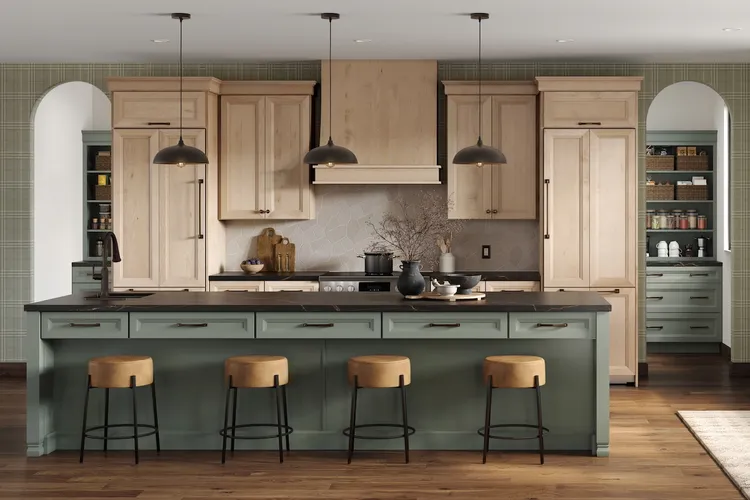
A deep olive kitchen with warm brass and unlacquered wood can feel intimate and grown-up. A pale stone living room with tobacco leather and black accents can feel crisp without turning cold. Even a soft blue bedroom becomes sharper when you introduce one earthy note, like rust or clay. Color needs tension to feel mature.
If you want help finding a clearer visual direction, browsing a strong design editorial archive can sharpen your eye faster than scrolling endless mood boards. The point is not to copy a room. It is to notice how restrained palettes create emotional clarity. That is what smart homes often miss while chasing gadgets.
Shape the Room Around Light and Movement
A beautiful room that fights your daily movement never feels elegant for long. You can own lovely furniture, expensive lighting, and custom joinery, then ruin the mood by forcing people to squeeze past a chair or glare into a bulb at dinner. Elegance must work when the groceries arrive, when guests sit down, and when you cross the room half awake.
Flow creates dignity. That sounds dramatic, but it is true. You feel it in homes where you can move naturally without thinking. The room does not snag your body or your attention. It guides both. Lighting does the same. It should flatter people, soften surfaces, and support the way you actually live after sunset.
Homes packed with smart features need this discipline even more. Hidden wiring, charging zones, sensors, and screens all shape the room whether you admit it or not. Better to design around them than pretend they are invisible.
Layer Lighting So Every Hour Feels Intentional
One ceiling light can make a room bright. It cannot make it elegant. Graceful interiors rely on layers, because life happens in layers too. You cook, read, work, host, fold laundry, and doom-scroll under the same roof. A single glare-heavy fitting treats every moment like an operating theater.
Use ambient light for the room’s base, task light where hands and eyes need help, and accent light to create shape. A pendant over a dining table, a lamp near a reading chair, under-cabinet lights in the kitchen, and a soft wall light in a hallway can change the whole experience of a home. Suddenly the room has mood, not just visibility.
The strongest lighting choice is often restraint. Skip the icy bulbs. Avoid fixtures that look like alien sculptures unless the rest of the room can carry them. Let light wash a textured wall, catch the edge of timber, or warm a corner that used to disappear at night. That is where elegance lives after dark.
Arrange Furniture for Real Life, Not for Floor Plans
Furniture placement tells the truth about how a home works. You can spot performative rooms immediately. The sofa faces nothing useful. The chairs cannot hold a conversation. The side table sits too far away to reach a cup. It all looks neat until a human enters the frame.
Arrange seating around use, then shape the beauty around that use. In a living room, people should be able to speak without raising their voices and reach a surface without leaning like acrobats. In a bedroom, pathways should stay clear from bed to wardrobe to door. In a kitchen, prep areas should not fight with traffic.
A family home in Karachi I once helped restyle had one huge sectional jammed against every wall, as if the room feared open space. We pulled it forward, added two smaller chairs, and left breathing room behind. The room looked larger within an hour. More importantly, people started sitting in it differently. That is the test.
Add Character Without Losing Discipline
After restraint, materials, and layout come together, many people panic and overcorrect. They worry the room feels too plain, so they throw in personality by the armful. This is where elegance either matures or collapses. Character should sharpen the room, not crowd it. One honest choice always beats five fashionable ones.
A home without character feels rented, even when you own it. But character does not mean constant novelty. It means the room reveals taste, memory, and point of view in measured ways. The best spaces feel edited by a person, not merchandised by a shop. There is a difference, and you can feel it immediately.
This is where the conversation around smart homes gets interesting. Tech often promises convenience while draining visual soul from a room. The answer is not rejecting technology. It is framing it inside a home that still feels unmistakably yours.
Choose Objects That Carry Story, Not Just Style
Real elegance likes objects with memory. A vintage stool by the window, a framed sketch from a local market, your grandmother’s bowl holding lemons, or a crooked ceramic piece you bought on holiday because you could not stop thinking about it. Those choices give a room pulse.
You do not need every item to come with a sentimental speech. But the room should contain a few things that could not have been picked by an algorithm chasing trends. That is why homes with modest budgets often feel stronger than expensive ones. The owner chose with affection instead of panic.
Keep the display tight. A single old brass candlestick on a modern shelf can say more than a whole row of matching décor. A stack of books with worn spines can ground a glossy room. Taste gets louder when you stop yelling.
Edit Constantly So Elegance Can Keep Breathing
Elegant interiors are never finished in the dramatic, final way social media suggests. They stay alive through editing. Seasons change. Habits shift. Children grow. New tech arrives. Light falls differently when you repaint the walls. A good room adapts because someone keeps paying attention.
Make a habit of reviewing one area every month. Rotate art. Remove one thing from each visible surface. Test a lamp in a new corner. Rehang curtains higher. Swap the oversized rug that shrinks the room for one that actually frames the furniture. Small shifts protect the room from going stale or crowded.
This is also how you avoid trend fatigue. Not every idea deserves a place in your house. Some belong in hotels, showrooms, or on other people’s feeds. Your job is not to keep up. Your job is to protect the mood you worked hard to build.
Conclusion
Elegant interiors do not ask you to be richer, trendier, or more performative. They ask you to be sharper. You notice what interrupts the room, what calms it, what earns attention, and what steals it for no good reason. That kind of seeing changes everything. You stop buying random fixes and start making better decisions on purpose.
The most satisfying homes are not the ones packed with talking appliances and flashy furniture. They are the ones that support your day while still feeling composed at nine o’clock at night when the dishes are done and the lights go soft. That is the real promise behind smart living. It should make life easier, yes, but also more gracious. When you style interior spaces with restraint, material honesty, better lighting, and a little nerve, elegance stops being a vague dream and becomes a daily standard.
Start with one room this week. Clear it, soften it, and question every object that begs for attention. Then keep going. Your home does not need a dramatic makeover. It needs a stronger point of view, and you are more than capable of giving it one.
What is the easiest way to make interior spaces look more elegant?
Start by removing clutter and visual noise. Then focus on fewer, better pieces with strong shapes, calm colors, and layered lighting. Elegance usually appears when a room feels settled, not stuffed. Editing beats shopping almost every single time at home.
How do I style interior spaces with elegance on a small budget?
Work with layout, paint, lighting, and restraint first. Rearranging furniture, swapping harsh bulbs, steaming curtains, and removing cheap-looking extras can change a room fast. Spend later on one solid piece, like a rug or lamp, that anchors everything properly.
Which colors make a home feel elegant instead of dull?
Soft stone, warm white, olive, clay, charcoal, and muted blue often feel refined because they hold depth without shouting. The trick is contrast. Pair gentle colors with darker accents, natural wood, or textured fabrics so the room feels alive, not washed out.
How can smart homes still feel warm and stylish?
Hide wires, reduce visible gadgets, and balance technology with tactile materials like wood, linen, ceramic, and wool. Smart homes feel warmer when tech supports the room quietly instead of dominating it. Convenience should help the mood, not flatten the character completely.
What furniture layout mistakes ruin an elegant room?
Pushing everything against the walls, blocking walkways, and ignoring conversation zones ruin flow fast. A room looks better when furniture relates to people, not just measurements. Leave breathing space, keep side tables reachable, and let movement through the room feel effortless.
Do I need matching furniture to create an elegant interior?
No, matching furniture can make a room feel stiff and forgettable. What you need is harmony through repeated tones, shapes, or materials. A room feels elegant when pieces relate well, even if they come from different periods, shops, or price points.
How often should I update my home styling?
You do not need constant makeovers, but you do need regular editing. Review each room every few months, remove what no longer helps, and adjust lighting or textiles with the season. Elegant homes stay fresh because someone keeps noticing the details.
What kind of décor adds character without creating clutter?
Choose objects with story, texture, or emotional weight. A vintage bowl, framed art, handmade pottery, or a well-loved book stack adds depth. Limit the number, give each piece space, and avoid buying décor that only exists to fill an empty corner.