A beautiful room does not begin with money. It begins with restraint. Most homes look messy, tired, or oddly cold for one simple reason: people keep adding before they learn how to edit. If you want to style interior spaces with real elegance, you need a sharper eye, not a bigger shopping cart.
Elegant interiors never scream for attention. They pull you in quietly, then keep revealing themselves as you sit down, notice the light, touch the fabric, and realize nothing feels accidental. That is the difference between a room that looks decorated and one that feels deeply considered. You do not need a mansion or a designer address to get there either. I have seen modest flats feel richer than expensive homes because the choices were calmer, smarter, and more honest.
The trick is not copying a showroom. The trick is building rooms that look settled, balanced, and alive. That means shaping color, scale, texture, and mood so they work together instead of fighting for air. Once you understand that, elegance stops feeling mysterious. It becomes a set of choices you can make on purpose, one room at a time.
Start with a calm foundation before you decorate anything
Elegant rooms do not begin with cushions, candles, or trendy side tables. They begin with what sits underneath everything else: wall color, flooring tone, major furniture shape, and the amount of visual noise already in the room. If the base feels loud, no accessory can save it. Think about a narrow city apartment with cream walls, warm oak floors, and a simple linen sofa. It already feels composed before a single decorative object enters the scene. That is the power of a steady foundation. When you style interior spaces from the ground up, you stop fixing chaos later.
Choose colors that settle the room instead of stirring it up
Soft color does not mean boring color. That idea has ruined more rooms than bad lighting. A gentle stone, chalky olive, warm white, or dusty clay can carry enormous character without making your eyes tired by dinner.
Color should hold the room together, not split it into separate arguments. When walls, curtains, and larger furniture live in the same tonal family, the room looks wider and calmer. The effect feels expensive because the eye moves without interruption.
I once watched a friend repaint a bright blue dining nook into a muted mushroom shade and the whole apartment exhaled. Same table. Same chairs. Same budget. But suddenly the space had dignity, and every object inside it looked more intentional.
Let the largest furniture pieces do the heavy lifting
Big furniture sets the emotional tone long before smaller details get a chance. A bulky sofa with stiff arms can make a room feel defensive. A lower, softer silhouette opens the room and makes everything around it feel less uptight.
This is why shape matters more than people admit. Rounded corners, visible legs, balanced proportions, and breathable spacing can rescue even a plain room. You are not just buying furniture. You are deciding how the room will carry its own weight.
Look at boutique hotels that feel inviting the second you walk in. They rarely crowd the room with oversized pieces. They choose fewer items, give them space, and let form create quiet confidence. Home should do the same, only with more soul.
Clear visual clutter before you add decorative personality
Most people try to create elegance by layering more. That usually backfires. Elegance comes from removing the wrong things first: the extra side chair no one uses, the random baskets, the tangle of small décor that turns every surface into a gift shop shelf.
Clutter is not just physical. It is visual pressure. When every corner asks for attention, the room starts to feel restless, even if it is technically clean. You notice it in your body before you notice it with your eyes.
A room with one strong lamp, one framed piece, and one beautiful bowl often feels richer than a room with twenty little objects. That restraint gives your favorite pieces a chance to matter. Good editing is not harsh. It is generous.
Use texture and contrast to make elegance feel human
Once the foundation settles, a room needs tactility. Not clutter. Not decoration for its own sake. Texture gives elegance warmth, depth, and that hard-to-name feeling that makes a space seem lived in by someone with taste rather than staged for a listing photo. This is where many nice rooms go flat. They match too perfectly, and perfection can feel sterile fast. The answer is contrast with discipline. A brushed wood table beside a soft boucle chair, a crisp wall behind a worn vintage rug, a ceramic lamp on a sleek console. These moves give a room pulse.
Mix materials that age well and feel honest to the touch
A room starts to feel grown up when its materials stop pretending. Real wood, linen, wool, marble, jute, cotton, and matte metal all bring something useful to the table: age, softness, weight, grain, or reflection. You do not need all of them. You need a few that speak clearly.
Cheap shine often weakens a room. Surfaces that glare too much can make everything feel temporary. Matte and natural finishes tend to read as calmer because they do not beg for attention every second of the day.
One of the smartest living rooms I have seen paired a plain oatmeal sofa with a dark walnut coffee table and a rough hand-thrown vase. Nothing flashy. Yet the space felt layered, grounded, and unmistakably personal. Your hands would have liked it before your eyes did.
Balance polished pieces with something slightly imperfect
Elegance gets boring when everything is pristine. A room needs a little friction. That could be an antique mirror with foxing at the edges, an old stool dragged into service as a bedside table, or a rumpled linen curtain that catches the light beautifully at five in the afternoon.
The best interiors always have one thing that breaks the spell just enough. That small imperfection keeps the room human. It tells you someone lives here, thinks here, spills coffee here, and still knows what looks good.
Perfection belongs in catalogs. Personality belongs at home. When every item looks newly delivered, the room can feel like it has no memory. Add one object with age, texture, or a story, and the room suddenly has a heartbeat.
Make contrast visible, but never loud
Contrast is one of the secret engines behind elegant design. Light against dark. Smooth against rough. Structured against soft. Without it, a room can fade into a polite blur. With too much of it, the room starts shouting.
You want controlled contrast. A black lamp on a pale console. A dark dining chair under a creamy plaster wall. A sleek glass surface softened by a woven runner. These choices sharpen the space without making it tense.
This is where many people overdo the trend cycle and lose the plot. They chase dramatic contrast because it photographs well. Then they have to live inside it. That gets old. Real elegance keeps the drama on a short leash.
Light, layout, and rhythm decide whether a room feels graceful
Here is the part people ignore because it is less fun than shopping: a room can have beautiful things and still feel wrong if the layout is clumsy or the lighting is flat. Elegance needs movement. Your eye should travel easily. Your body should move without bumping into furniture corners or fighting a badly placed rug. Rhythm matters. So does light. A room that glows from several levels will always beat one sad overhead fixture trying to do all the work.
Arrange furniture for conversation, not just for walls
Pushing every piece against the wall is one of the fastest ways to make a room feel awkward. People do it because they think it creates space. Often it creates emptiness around the middle and discomfort everywhere else.
Furniture should relate to other furniture. Chairs should angle toward each other. Sofas should anchor a zone. Side tables should land where a hand naturally reaches. That kind of layout feels elegant because it respects how people actually live.
Take a modest sitting room with two chairs floated near the sofa, a rug large enough to hold them together, and a lamp tucked behind the corner. Suddenly the room feels social, useful, and calm. It invites conversation instead of waiting for instructions.
Layer lighting so the room changes with the hour
Overhead lighting alone flattens a room like bad makeup. It wipes away mood and turns even thoughtful interiors into something harsh. Elegant rooms know better. They build light in layers: ceiling light for function, table lamps for warmth, wall lights for shape, maybe a candle when the evening deserves it.
Light should answer the hour. Morning light can feel crisp and clear. Evening light should soften edges and make the room pull closer. That shift gives a home emotional range, and range is part of what makes a space memorable.
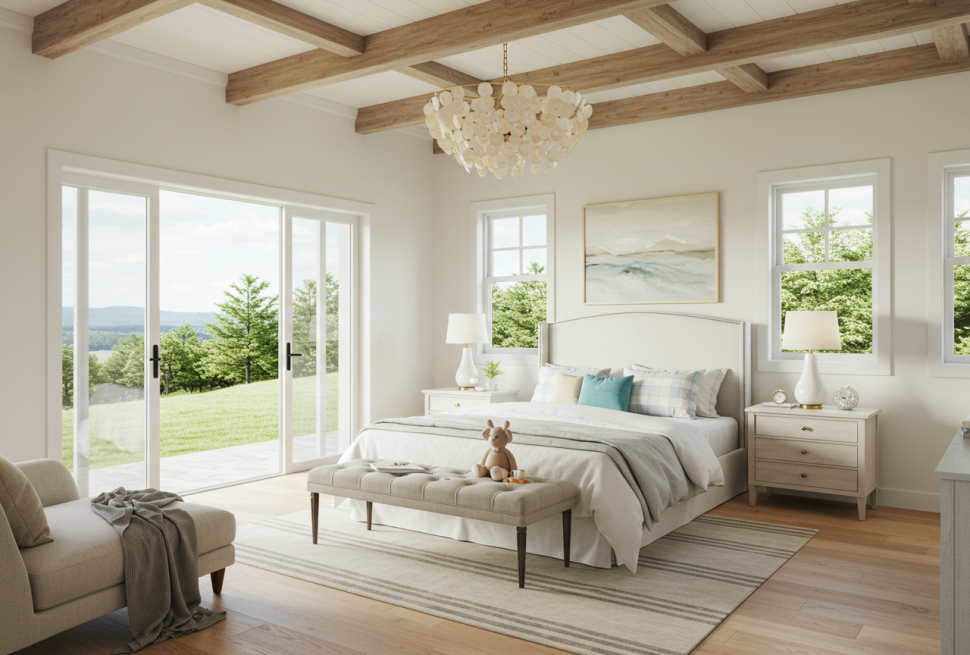
A bedroom with one ceiling fixture feels unfinished no matter how nice the bedding looks. Add two low lamps and a warm bulb, and the same room starts to feel composed. Small fix. Big change.
Repeat shapes and tones to create quiet rhythm
Rhythm in a room works a lot like rhythm in music. You do not need the same note repeated loudly. You need patterns that return just enough to feel intentional. A curved lamp echoed by a rounded chair back. Black accents that appear in three places, not ten. Walnut tones repeated between a frame, a table, and a stool.
These repetitions make a room feel settled. The eye relaxes because it senses order without being hit over the head with matching sets. That is a subtle trick, but it carries a lot of design weight.
If a room feels random, it usually lacks rhythm. If it feels stiff, the rhythm has become too exact. The sweet spot sits in between, where you can sense a point of view without seeing a formula.
Personal details are what turn elegance into character
A room can be tasteful and still feel emotionally blank. That happens when someone follows every design rule but leaves no trace of their own life in the space. Real elegance is not cold. It is selective. It lets in art, books, objects, and habits that mean something, then frames them with care. This final layer is where a room stops looking styled for approval and starts feeling truly inhabited. If you want to shape a home with lasting media presence, that kind of authenticity matters even more, because people can tell when a space has a pulse.
Display fewer objects, but choose pieces with real presence
You do not need shelves packed edge to edge to prove you have taste. In fact, that usually hides taste. A single oversized ceramic piece, a stack of art books you actually read, or one framed photograph with breathing room can say more than a crowded mantel ever will.
Objects gain force when you give them space. That space acts like silence in a conversation. It lets the important thing land. This is especially true in smaller homes, where visual overload arrives fast and lingers.
I am far more impressed by one excellent chair beside a clean stack of books than by fifteen decorative items bought in one weekend. The first choice tells me someone knows themselves. The second tells me they panicked in a home store.
Bring in art and textiles that reflect your real taste
Art should not feel like a box you tick because the wall looked empty. It should change the mood of the room. The same goes for textiles. A rug, throw, or curtain can soften a hard space, but only if it feels chosen rather than merely matched.
This is the moment to trust what you actually respond to. Maybe that means abstract art with room to breathe. Maybe it means a faded landscape, striped cushions, or a rug with imperfect patterning that keeps the room from feeling too rehearsed. That is where interior spaces begin to show their owner.
One warning, though. Do not buy “elegant” things you do not like. You will feel that mismatch every day. The point is not to perform refinement. The point is to build it around your own eye.
Style interior spaces for living, not just for looking
The most elegant room in the world fails if you hate using it. Beauty matters, but comfort closes the deal. A reading chair should support your back. A coffee table should allow your knees to pass. Dining chairs should survive a long dinner without punishment.
A graceful room makes daily life easier while still giving you pleasure. That means blankets where you reach for them, lighting where you need it, storage that hides mess without hiding your life. Function is not the enemy of beauty. It is what keeps beauty believable.
This is also where a lot of fancy-looking rooms fall apart. They photograph beautifully, then irritate everyone who lives there. Do not build for the camera. Build for the hour after dinner, the Sunday morning light, and the friend who stays longer because the room feels good.
Elegant rooms stay with you because they do more than look nice. They steady your mood, sharpen your attention, and make ordinary routines feel a little richer. That effect does not come from chasing every trend or copying the latest social feed. It comes from learning to notice what calms a room, what gives it depth, and what makes it unmistakably yours. If you want to style interior spaces with confidence, start by editing hard, choosing materials with character, and respecting the way people actually move through a home.
The deeper truth is this: elegance is not a luxury finish applied at the end. It is a discipline. It asks you to care about proportion, comfort, light, and honesty in equal measure. It also asks you to stop buying things just because they seem polished in someone else’s house. Your home deserves better than borrowed taste.
So take one room this week and look at it with fresh eyes. Remove three things. Improve one light source. Add one object with meaning. Shift the layout if it feels stiff. Those small decisions stack up fast. And once they do, your style interior spaces approach stops being a vague goal and becomes a lived standard you can keep building on.
What is the first step to styling interior spaces with elegance?
Start by removing visual clutter and studying the room’s foundation. Look at wall color, floor tone, large furniture, and natural light first. Elegant styling starts with editing, not shopping. A calm base makes every later choice look smarter and more intentional.
How do I make my home look elegant without buying expensive furniture?
Pick fewer pieces and choose better shapes. Focus on proportion, spacing, fabric texture, and lighting rather than price tags. A secondhand wood table, a clean rug, and warm lamps often beat costly furniture arranged badly in a visually crowded room.
Which colors work best when trying to style interior spaces beautifully?
Warm whites, soft taupes, muted greens, dusty blues, and earthy neutrals usually work well. They calm the eye and help textures stand out. Loud color is not wrong, but elegance usually comes from restraint, balance, and a steady tonal palette.
How can lighting make interior spaces feel more elegant at home?
Layer your lighting instead of relying on one overhead fixture. Use table lamps, wall lights, floor lamps, and warm bulbs to shape mood. Good lighting softens sharp edges, creates depth, and makes even simple rooms feel thoughtful, welcoming, and beautifully finished.
What mistakes make stylish rooms look cluttered instead of elegant?
Too many small accessories, furniture that is oversized, poor spacing, harsh lighting, and trendy pieces with no connection to each other cause trouble. Rooms feel elegant when objects have breathing room, shapes relate well, and every item earns its place.
How do I add personality while keeping an elegant interior look?
Choose pieces that mean something to you, then show them with restraint. Art, books, vintage finds, and textiles can add soul without making the room messy. Personal style feels elegant when it is edited, honest, and supported by a calm backdrop.
Can small apartments still be styled with elegance and warmth?
Yes, and sometimes they do it better than large homes. Smaller rooms reward discipline. Keep furniture scaled correctly, use layered lighting, avoid tiny clutter, and let a few strong pieces lead. Elegance in compact spaces comes from precision, not square footage.
How often should I update my interior styling to keep it fresh?
Refresh seasonally, but do not redesign constantly. Swap textiles, adjust lighting, edit surfaces, and move objects around when the room feels stale. The best interiors evolve slowly. That steady rhythm keeps your home interesting without making it feel unsettled.