A mudroom floor gets punished in ways most rooms never see. Boots drag in road salt, kids drop backpacks, dogs shake off rain, and one rushed grocery trip can leave a trail from the garage door to the kitchen. The right mudroom tile options matter because this small entry zone often protects the rest of the house from daily mess. When the floor fails, the whole home feels harder to keep clean.
American homes put extra pressure on these spaces. A family in Minnesota deals with snowmelt and salt. A homeowner in Georgia fights red clay. A house near the Pacific Northwest may see months of damp shoes and wet paws. That is why a smart floor choice belongs in the same conversation as storage, drainage, and durable home upgrade planning. A pretty tile that turns slick or traps grime in every groove becomes a regret fast.
The goal is not to pick the fanciest floor. The goal is to choose a surface that takes abuse, cleans up without drama, and still looks like it belongs inside your home.
What a Mudroom Floor Has to Survive Before Looks Matter
A mudroom is not a decorative pause between outdoors and indoors. It is a work zone wearing a nicer outfit. The floor has to handle grit, moisture, dropped gear, pet traffic, cleaning products, and fast temperature swings near exterior doors. Style matters, but it comes second to what the room faces every week.
Why Entry Dirt Behaves Differently Than Normal Dust
Outdoor grit is rougher than indoor dust. It rides in on shoe soles, stroller wheels, garden clogs, sports cleats, and dog paws. Once it lands on the floor, it acts almost like sandpaper underfoot. A soft surface may look fine for the first month, then slowly show cloudy wear paths where people enter every day.
This is where many polished tiles disappoint homeowners. They shine in the showroom, yet they expose every footprint near a side door. In a Chicago suburb, a polished light tile might look clean at noon and messy by dinner because melting snow leaves a dull film behind. The dirt is not the only problem. The contrast is.
Texture helps, but too much texture creates another problem. Deep ridges can trap mud, grass, and salt crystals, which means you scrub instead of wipe. The smarter choice sits in the middle: enough surface grip to feel safe, but not so much tooth that cleanup becomes a weekend chore.
Which Mudroom Flooring Ideas Work Best for Snowy Entries?
Cold-weather homes need surfaces that tolerate water sitting for short periods. Snow falls off boots in clumps, then melts into salty puddles. If the tile absorbs moisture or the grout is too wide and porous, the floor starts working against you. That is how stains creep in before anyone notices.
Good mudroom flooring ideas for snowy states often start with porcelain tile because it is dense, hard, and low in water absorption. It also handles freeze-thaw stress better than many softer materials when installed near exterior entries. The floor still needs proper underlayment and sealing where needed, but porcelain gives you a strong base.
One counterintuitive point: darker tile is not always easier. Black, charcoal, and deep brown can show salt marks like chalk on a board. A mid-tone gray, taupe, slate look, or mixed-color tile often hides winter residue better between cleanings. The floor looks calmer because it does not turn every white streak into a spotlight.
Mudroom Tile Options That Balance Grip, Strength, and Cleanup
The best floor in this space feels practical before it feels impressive. It should give shoes enough traction, resist scratches from grit, and clean without special care. Mudroom tile options that meet all three needs tend to share the same traits: dense material, forgiving color, moderate texture, and a finish that does not panic every time rain comes through the door.
What Makes Durable Tile for Mudroom Traffic Worth It?
Porcelain tile is often the safest all-around pick for heavy-use entries. It resists moisture, handles repeated cleaning, and comes in styles that mimic stone, cement, brick, and wood without taking on their maintenance demands. A busy household with two kids and a Labrador will notice the difference after the first muddy season.
Durable tile for mudroom floors also protects the home from small daily damage. Think about what lands in this space: gravel stuck in boot treads, metal pet bowls, laundry baskets, tool bags, and wet umbrellas. A weaker floor may not fail in one dramatic moment. It wears down in tiny cuts, chips, and dull spots.
Ceramic tile can still work in lighter mudrooms. It may suit a side entry that sees less gear and fewer wet shoes. The tradeoff is strength. If the space connects to a garage, backyard, or driveway, porcelain usually earns its higher cost through fewer headaches.
When Natural Stone Makes Sense and When It Does Not
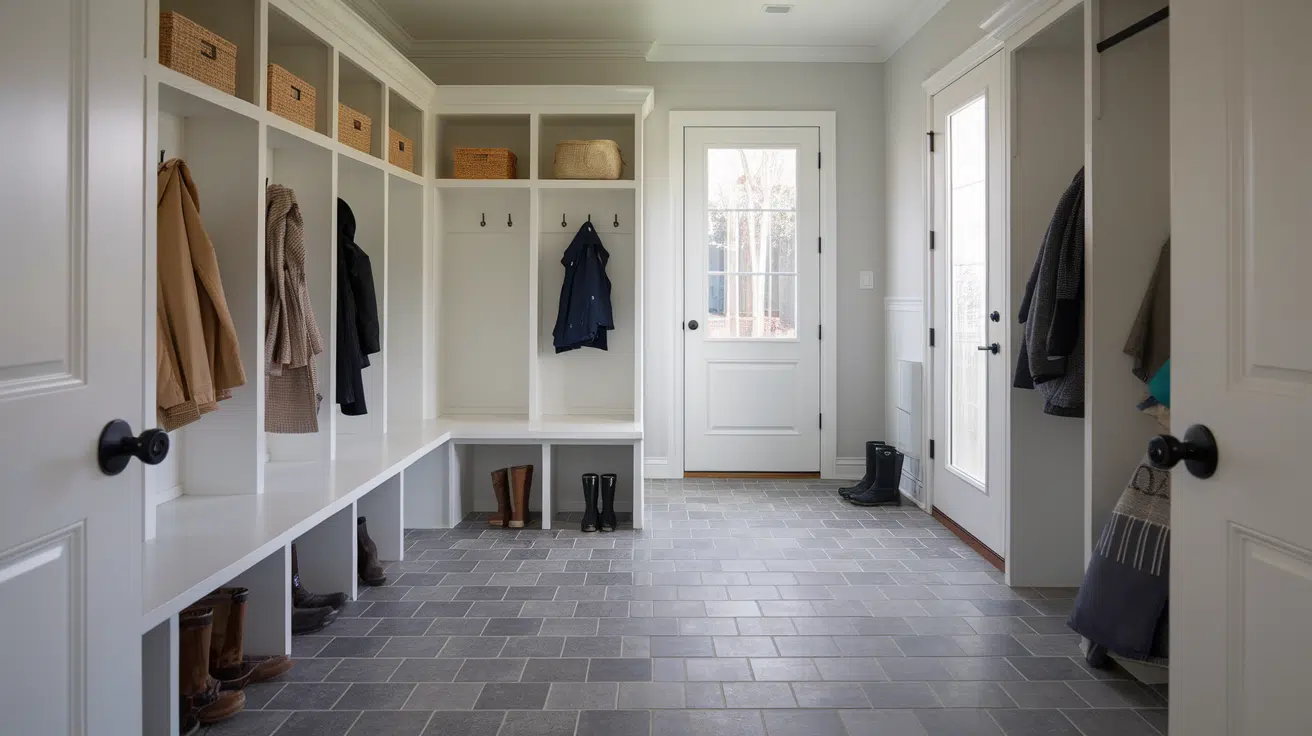
Slate, travertine, limestone, and other stone tiles bring a grounded look that manufactured tile tries to copy. In the right house, stone can make a mudroom feel settled and permanent. A farmhouse entry with slate under a wood bench has a kind of honesty to it that many glossy floors lack.
Stone asks for more care, though. Some types need sealing, and textured surfaces can hold dirt in uneven layers. Limestone and travertine may stain if wet shoes, soil, or cleaning sprays sit too long. That does not make them bad choices. It means they belong in homes where the owner accepts maintenance as part of the deal.
Slate is usually the stronger stone candidate for mudrooms. It has natural grip and hides dirt well, especially in mixed gray, green, rust, or charcoal tones. The surprise is that slate can look cleaner than some smooth porcelain because its color movement disguises daily mess. Still, uneven cleft slate can make mopping less pleasant if the texture is too aggressive.
Size, Color, and Pattern Decide How Clean the Room Feels
Material gets most of the attention, but layout choices decide how the floor behaves in real life. Tile size, grout width, color variation, and pattern can make dirt vanish or make every smudge look louder. This is where a mudroom stops being a materials decision and becomes a visual strategy.
How Mudroom Floor Tile Patterns Hide Real-World Mess
Pattern is not only style. It is camouflage. Mudroom floor tile patterns with movement, variation, or broken lines can hide paw prints and dirt better than one flat color. A herringbone brick-look porcelain tile, for example, can make a narrow entry feel crafted while also distracting from small debris between cleanings.
Large-format tile has fewer grout lines, which helps with mopping. Yet big tiles on a small mudroom floor can sometimes make the space feel plain and expose dirt more clearly. Smaller tiles create more grout, but they can add grip and visual interest. The trick is choosing a pattern that works with the room’s size.
A 6-by-24 porcelain plank may suit a long garage entry. A 12-by-24 stone-look tile can calm a square mudroom. A small hex tile can work near a back door, but only when the grout color is forgiving. White grout in a mudroom is not brave. It is a future argument with yourself.
Why Grout Color Can Make or Break Easy-to-Clean Mudroom Floors
Grout is the quiet troublemaker. Homeowners fall in love with tile, then treat grout like a minor detail. In a mudroom, grout takes direct hits from muddy water, road salt, spilled pet food, and cleaning chemicals. A poor grout choice can make a good tile feel like the wrong floor.
Easy-to-clean mudroom floors usually pair tile with grout close to the dirt color the room sees most. That may sound odd, but it works. In a yard-heavy home, warm gray or taupe grout often hides soil better than bright white. In a snowbelt home, medium gray may handle salt stains better than black or cream.
Narrow grout joints help, but they need skilled installation. Rectified porcelain tiles can support tighter lines, while handmade or uneven tiles may need wider joints. Epoxy or high-performance grout can reduce staining, though it costs more and needs careful installation. Pay once here, or keep paying with your knees and a scrub brush.
Safety, Comfort, and Maintenance Should Shape the Final Pick
A mudroom floor has to serve the body, not only the eye. People step into this room with wet soles, tired arms, and distracted minds. A floor that looks sharp but turns slippery near a door creates risk. A floor that needs fussy care creates resentment. The best choice is the one you can live with on the worst weather day of the year.
How Slip Resistance Changes the Feel of a Busy Entry
Slip resistance matters most when water and speed meet. A child running in from soccer practice does not slow down to respect your tile finish. A parent carrying groceries will not notice a puddle until one foot slides. That is why matte, textured, or slip-rated surfaces deserve more attention than shine.
Highly polished tile rarely belongs in a hard-working mudroom. It may look elegant under store lighting, but wet shoes change the whole story. A matte porcelain with a light texture gives a better balance. It feels safer without turning the floor into rough outdoor paving.
The unexpected issue is socks. Some textured tiles grip shoes well but feel harsh under bare feet. That may not matter in a garage entry, but it matters near a laundry room or hallway where people walk through without shoes. Test samples with your hand, then imagine stepping on them before coffee on a winter morning.
Where Durable Tile for Mudroom Design Meets Daily Comfort
Comfort is not usually the first word people connect with tile, but it matters. Tile is hard underfoot, and mudrooms often become small command centers. You stand there tying boots, sorting mail, washing dog paws, or loading laundry. A floor that feels punishing can make the room less pleasant to use.
Durable tile for mudroom design works better when paired with smart support pieces. A washable runner near the door catches grit before it spreads. A boot tray keeps puddles contained. A bench encourages people to remove shoes instead of tracking dirt farther inside. The tile does the heavy work, but it should not do all of it alone.
Radiant floor heat can also change the room in colder parts of the USA. Warm tile helps snow melt faster and makes the entry feel less harsh in winter. It is not required, and it adds cost, but in a renovation where the floor is already open, it can turn a purely practical mudroom into one of the most appreciated spaces in the house.
Installation Details That Protect the Floor for Years
Tile performance depends on what happens beneath the surface. A great tile over a poor base can crack, shift, or trap moisture where you cannot see it. Mudrooms near exterior doors need special attention because they deal with water, temperature change, and heavy loads in a tight area.
Why Subfloor Prep Matters More Than the Tile Price
A mudroom floor needs a flat, stable, clean base. If the subfloor flexes, tile can crack. If old adhesive, uneven boards, or moisture problems remain, the finished floor may fail before the tile itself ever gets tested. This is the part no one sees, which is why it gets skipped too often.
Cement backer board, uncoupling membrane, and proper thinset all play roles depending on the existing structure. A contractor should check deflection, door clearance, transition height, and moisture risks before setting the first tile. That sounds fussy until you see a cracked line running through a brand-new entry.
A common real-world mistake happens when homeowners replace vinyl with tile without planning for height. The new floor may block a door sweep or create an awkward lip into the hallway. Good installation solves those issues before the floor becomes permanent. Bad installation leaves you noticing them every morning.
How Mudroom Floor Tile Patterns Affect Installation Cost
More complex layouts usually cost more because they take longer to measure, cut, and align. Mudroom floor tile patterns like herringbone, basket weave, and small hex mosaics can look beautiful, but they demand more labor. If the budget is tight, spend more on material quality and installation before chasing a complicated pattern.
Simple does not mean boring. A stacked rectangular tile with a smart grout color can look clean and modern. A running bond layout can soften a narrow room. A diagonal layout can widen the feel of a boxy entry, though it creates more cuts along walls and thresholds.
The best installer will talk you out of choices that fight the room. That honesty is worth money. A pattern that looks great online may break awkwardly around floor vents, doorways, or built-in benches. A floor should feel intentional from every angle, not like a puzzle forced into place.
Conclusion
A mudroom earns its keep one dirty day at a time. The floor has to take the hit before the mess reaches your living room, kitchen, or stairs. That means your final choice should be judged by grip, cleaning ease, moisture resistance, grout behavior, and how well the color hides real debris.
Trends can help you notice new looks, but they should not make the decision for you. A glossy tile that photographs well may fail the first week your dog comes in from a wet yard. A modest matte porcelain in a forgiving tone may become the floor you never think about because it simply works.
The smartest mudroom tile options are the ones that match your climate, your family habits, and the mess your home sees most often. Before buying, bring samples home, test them near the door, check them in daylight, and rub a little dirt across the surface. Choose the floor that still looks calm after that. Your mudroom will tell the truth before the receipt does.
Frequently Asked Questions
What is the best tile for a mudroom with heavy foot traffic?
Porcelain tile is usually the best choice for heavy foot traffic because it is dense, hard, and resistant to moisture. It handles grit, wet shoes, pet traffic, and repeated cleaning better than many softer flooring materials used near busy entry doors.
Are ceramic tiles good for mudrooms in American homes?
Ceramic tiles can work in lighter-use mudrooms, especially side entries with less moisture and fewer heavy items. For garage entries, snowy climates, or homes with pets and kids, porcelain is often the stronger choice because it resists wear and water better.
What color tile hides mud best in an entryway?
Mid-tone colors hide mud better than pure white or deep black. Gray, taupe, slate, clay, and mixed stone-look tiles usually disguise dirt, paw prints, and salt marks between cleanings without making the room feel dark or flat.
Should mudroom tile be matte or glossy?
Matte tile is usually safer and more practical in a mudroom. Glossy tile can become slippery when wet and may show footprints faster. A lightly textured matte finish gives better traction while still staying easy enough to clean.
What grout color is best for a mudroom floor?
Medium gray, taupe, warm beige, or clay-toned grout often works best because it hides common dirt better than white. The right choice depends on your tile color and the type of mess your entry sees most, from snow salt to garden soil.
Do large tiles or small tiles work better in mudrooms?
Large tiles create fewer grout lines, which can make cleaning easier. Small tiles can add grip and pattern, but they create more grout to maintain. The best choice depends on room size, slip needs, and how much cleaning you want to manage.
Can natural stone tile work in a mudroom?
Natural stone can work well when you accept the maintenance. Slate is often a strong option because it has grip and hides dirt. Softer stones may stain or need sealing, so they fit better in homes where regular care is realistic.
How do I keep a mudroom tile floor cleaner longer?
Use a good outdoor mat, a washable indoor runner, a boot tray, and grout that hides stains. Sweep grit often so it does not scratch the surface. Clean wet salt or mud before it dries into the grout lines.